

Chinese Neurosurgical Journal Article Finds That Flow Diversion Devices are Exceptionally Safe
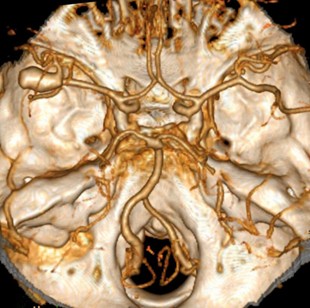
Long-term follow up of patients with intracranial aneurysm treated with flow diversion devices showed a low rate of complications and high rates of occlusion maintenance. Complications are very rare beyond 18 months post-surgery.
Long-term follow-up of patients with brain aneurysms finds that flow diversion devices have good outcomes with few complications
CHINA, May 18, 2026 /EINPresswire.com/ -- Intracranial aneurysms are a silent and dangerous vascular disorder where the wall of a major artery in the brain weakens and swells. The resulting sac can compress brain tissue and cause neurological symptoms or rupture, causing a cerebral hemorrhage. Endovascular treatment (EVT) is the first-line therapy against intracranial aneurysms. While many kinds of EVT are available, flow diverter devices (FDDs) are gaining popularity in recent years. FDDs consist of a high-density mesh that diverts blood cells away from the aneurysm sac, while also accumulating clotting factors to seal off the sac and re-grow arterial wall tissue.“Despite numerous studies on FDD efficacy, comprehensive long-term clinical outcome data remain scarce,” said Dr. Mahmoud Moubark, Lecturer at the Faculty of Medicine, Assiut University, Egypt. He adds that most studies have focused on one type of FDD, the Pipeline Embolization Device (PED), which creates knowledge gaps regarding the long-term safety of various FDD platforms.
Dr. Moubark and an international team of researchers, including Dr. Michael Findler of Rabin Medical Center—Beilinson Hospital, Petah Tikva, Israel, set out to address these gaps. They studied the long-term outcomes of patients treated for intracranial aneurysms with FDDs at two tertiary care centers in France between 2011 and 2016. Patients were followed up for up to 13 years after their procedures. The researchers’ findings were published on March 20, 2026, in Volume 12, Article Number 10 of the Chinese Neurosurgical Journal.
The study looked at 209 patients who were treated for 216 aneurysms. A total of 258 FDDs were deployed. 83.8% of procedures needed only a single FDD; the other 16.2% needed two or more devices. 5 types of FDDs were used, with PEDs making up 38% of all devices used.
Complications during or within 30 days after the procedure affected 4.3% and 6.2% of patients, respectively. 3 patients (1.5%) had adverse events between 1 month and 1 year after the procedure. 5 patients (2.5%) had adverse events between 12 and 18 months. No adverse events were recorded beyond 18 months after the procedure.
96.7% of patients survived until the end of the follow-up period, and only 1.4% died from procedure-related causes. 93.3% of patients had sufficient closure of the aneurysm sac over the course of the follow-up period. There were no significant differences in patient outcomes between the different FDDs used. However, patients who needed multiple FDDs were at a higher risk of insufficient closure.
“Our multi-device analysis revealed excellent long-term safety profiles across different FDD technologies, suggesting that long-term safety considerations should focus on patient and procedural factors rather than device characteristics,” said Dr. Findler. He added, “Multiple overlapping FDDs as the sole independent predictor of delayed complications is a critical finding. This provides quantitative evidence for treatment planning, suggesting that single-device strategies should be pursued whenever technically possible.”
What are some of the other implications of these findings for patients with intracranial aneurysms? “The absence of complications beyond 18 months suggests that intensive surveillance may be reduced after this threshold. However, continued monitoring is necessary for aneurysm occlusion assessment,” said Dr. Moubark.
Considering these encouraging findings about the long-term safety of FDDs, clinicians can confidently select devices as per their patients’ baseline characteristics. Follow-up protocols can also be less stringent after 18 months, reducing the burden on patients and physicians without significantly worsening patient safety.
Reference
Title of original paper: Long-term clinical follow-up of intracranial aneurysms treated with flow diverter devices: A bicentric retrospective study
Journal: Chinese Neurosurgical Journal
DOI: https://doi.org/10.1186/s41016-026-00429-7
About Assiut University, Egypt
Founded in 1957, Assiut University is one of the oldest universities in Upper Egypt. The university houses 16 faculties and three institutes, with 4,450 academic staff. Over 75,000 undergraduate and 18,000 postgraduate students study at the university. Times Higher Education ranks Assiut University as 401st globally and third in Egypt at meeting UN Sustainable Development Goals.
Website: https://b.aun.edu.eg/main/
About Dr. Mahmoud Moubark from Assiut University
Dr. Mahmoud Moubark is a lecturer at the Department of Diagnostic Radiology, Faculty of Medicine, Assiut University. He joined the department in 2012 and was promoted to Lecturer in 2019. His work focuses on the use of MRI to analyse vascular disorders and stenosis in major organs, especially the brain. Dr. Moubark has 10 academic publications to his credit and is a member of several national associations of radiology.
About Rabin Medical Center—Beilinson Hospital, Israel
Rabin Medical Center was formed in 1996 from the merger of two long-standing hospitals in the city of Petah Tikva, in Israel. Named after former premier Yithzak Rabin, this multi-specialty hospital has over 1,300 beds and houses specialized centers for cancer treatment, gynecological care, and genetic testing and counseling. In addition to its medical services, the center cultivates a strong culture of research in collaboration with leading universities in Israel and abroad.
https://rabin-medical.org/#about
About Dr. Michael Findler of Rabin Medical Center
Dr. Michael Findler is an Interventional Neuroradiologist in the Department of Neurology, Rabin Medical Center—Beilinson Hospital. His research focuses on vascular disorders that affect the brain, particularly ischemic stroke, and he has over 19 publications to his credit. In addition to his research and clinical practice, Dr. Findler also teaches at Tel Aviv University.
Yi Lu
Chinese Neurosurgical Journal
+86 10-59978478
email us here
Legal Disclaimer:
EIN Presswire provides this news content "as is" without warranty of any kind. We do not accept any responsibility or liability for the accuracy, content, images, videos, licenses, completeness, legality, or reliability of the information contained in this article. If you have any complaints or copyright issues related to this article, kindly contact the author above.
