

New Book Reveals Neuroscience Behind Crisis Response in Serious Illness: A 4 Stage Framework for Patients, and families
Everything
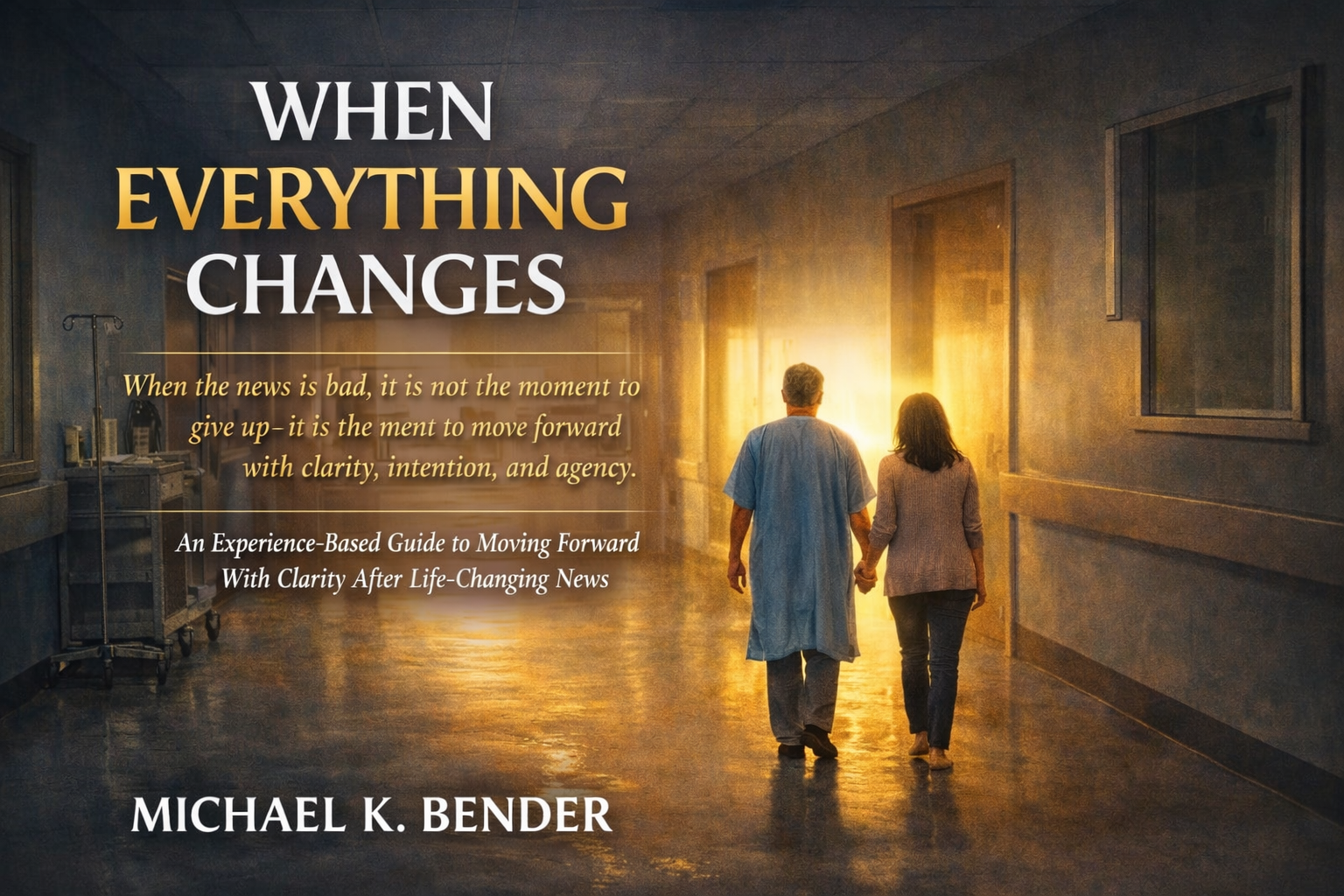
After Decades of Business Crisis Management to Medical Decision-Making, Practical Tools for Maintaining Clarity and Agency When Everything Feels Out of Control
This book isn't about optimism. It's about what happens when you can think clearly in the moments that matter most.”
CAIRO, NY, UNITED STATES, July 10, 2026 /EINPresswire.com/ -- A 78-year-old survivor, former Foreign Commercial Service Officer (diplomat), and CEO today announced the publication of When Everything Changes: Finding Clarity and Agency in Serious Illness. This guide combines neuroscience with practical decision-making tools for navigating serious medical diagnoses.— Michael K Bender
"He who does not live in some degree for others, hardly lives for himself."
— Michel de Montaigne
The Scale of the Problem
The American Cancer Society estimates 2,041,910 new cancer diagnoses in the U.S. in 2025—approximately 5,600 per day. Globally, a new cancer diagnosis occurs about every 1.5 seconds.
Beyond cancer, millions of Americans are diagnosed each year with serious chronic illnesses like heart disease, diabetes, and stroke-related conditions. Yet few resources address the psychological and neurobiological barriers patients and families face when processing life-altering medical information.
Understanding the Brain Under Crisis
"No one talks about what happens in your brain when you get a serious diagnosis," says author Michael K Bender. "Your amygdala fires, your prefrontal cortex goes offline, and you lose the ability to think clearly. This isn't weakness—it's neurobiology. Understanding it changes everything."
Diagnosed with metastatic prostate cancer 13 years ago and 7 years later with an 18–36-month prognosis, Bender applied decades of business and diplomatic crisis management experience to navigate medical decision-making.
The result: a four-stage psychological model that explains why patients can't remember medical information, why families fall out of alignment during crises, and how to reclaim intentional decision-making despite overwhelming fear.
The Four-Stage Framework
When Everything Changes presents a framework explaining each psychological stage of crisis response:
Freeze: The initial neurobiological shutdown when the brain protects itself from overwhelming threat
Flight: The avoidance, denial, and information-seeking paralysis following initial shock
Fight: The action-driven stage where executive function re-engages, and patients begin moving forward
Focus: The sustainable clarity stage where patients separate emotion from strategy and make decisions aligned with how they actually want to live
"Most books about serious illness focus on the fight," Bender notes. "But focus is where real agency lives. It's the stage where you stop fighting just to fight and start making decisions aligned with how you actually want to live."
Practical Tools for Real Crises
The book provides concrete resources for patients, families, and healthcare providers:
• Daily grounding rituals (5-minute morning, 3-minute midday, 5-minute evening)
• Communication scripts for talking to doctors, family, and yourself
• Templates for managing uncertainty and preventing caregiver burnout
• Real case studies of patients navigating freeze, flight, fight, and focus
• Guidance for clinicians on recognizing patient psychological stages and delivering bad news effectively
Bridging a Critical Gap
The book addresses a critical gap in medical literature: the distinction between medical clarity (clear information delivery by healthcare systems) and emotional clarity (the patient's and family's ability to process, comprehend, and act on that information during crisis).
"When patients regain clarity, they ask better questions—and get better answers," Bender explains. "They recognize when fear is driving a decision versus wisdom. They advocate for themselves instead of accepting the first option presented. And families who regain clarity stop talking past each other and start making decisions together."
This book isn't about optimism. It's about what happens when you can think clearly in the moments that matter most.
When patients regain clarity, they ask better questions of their doctors—and get better answers. They recognize when fear is driving a decision versus wisdom. They advocate for themselves instead of accepting the first option presented. Families who regain clarity stop talking past each other and start making decisions together. Clinicians who understand these stages stop misreading silence as acceptance and avoidance as denial—they see what's actually happening in the patient's mind and adjust accordingly.
Why Now?
Post-pandemic, serious illness diagnoses have increased, and families are struggling without frameworks for psychological navigation.
Healthcare systems remain focused on delivering medical information without addressing the neurobiological barriers that prevent patients from actually understanding and using it. When the news is bad, it is not the moment to give up.
About the Book
Title: When Everything Changes: Finding Clarity and Agency in Serious Illness
Author: Michael K. Bender
Publication Date: July 2026
Format: Paperback, eBook
ISBN: 979-8185068533
Price: $10.95
Available: https://www.amazon.com/dp/B0H7373ZNS
Website: www.mkbender.com
michael@mkbender.com
Michael Bender
Michael K Bender
+1 5187041688
email us here
How to deal with serious diagnosis
Legal Disclaimer:
EIN Presswire provides this news content "as is" without warranty of any kind. We do not accept any responsibility or liability for the accuracy, content, images, videos, licenses, completeness, legality, or reliability of the information contained in this article. If you have any complaints or copyright issues related to this article, kindly contact the author above.
